How to Make a Classic Bean and Rice Dish
I. Introduction
The combination of beans and rice has a long history as a staple food across various cultures and continents. This nourishing duo has been a source of sustenance for millions due to its affordability, availability, and nutritional density. From the fields of Latin America to the kitchens of Asia, beans and rice have woven their way into the culinary traditions of countless societies.
Beyond its rich history, the nutritional benefits of combining beans and rice are profound. Together, they offer a complete protein profile, providing all nine essential amino acids when consumed in tandem. They are also a great source of dietary fiber, vitamins, and minerals, making them perfect for a balanced diet.
Moreover, the versatility of this dish cannot be overstated. Whether prepared as a simple side or a hearty main course, beans and rice can adapt to various cultural flavors, making it a beloved dish all over the world. It holds cultural significance in many cuisines, often reflecting regional ingredients and flavors.
II. Ingredients
A. List of Essential Ingredients
- Types of Beans: Black beans, pinto beans, kidney beans, and more.
- Rice Varieties: Choose from white, brown, jasmine, or basmati rice.
- Aromatics: Fresh onion and garlic to build flavor.
- Spices: Cumin, paprika, salt, and pepper for seasoning.
- Optional Add-ins: Bell peppers, tomatoes, and fresh cilantro for garnish.
B. HTML Table of Ingredients
| Ingredient | Amount | Notes |
|---|---|---|
| Beans | 1 cup (dry) | Any variety you prefer |
| Rice | 1 cup | White or brown |
| Onion | 1 medium | Diced |
| Garlic | 2 cloves | Minced |
| Spices | 1 tsp each | Cumin, paprika, salt, pepper |
| Optional Vegetables | 1 cup | Bell peppers, tomatoes, etc. |
III. Preparation Steps
A. Soaking and Cooking the Beans
Preparing beans properly is crucial for achieving the best flavor and texture. Here are two methods to soak and cook dried beans:
1. Overnight Soaking Method
- Rinse the beans under cold water to remove any dirt or debris.
- Place the beans in a large bowl and cover them with at least 3 inches of water.
- Let the beans soak overnight (8–12 hours). Drain and rinse before cooking.
2. Quick Soak Method
- Rinse the beans and place them in a pot. Cover with water (3 inches above the beans).
- Bring the water to a boil and cook for 2 minutes.
- Remove from heat, cover, and let soak for 1 hour. Drain and rinse.
3. Cooking Time and Tips
Once soaked, beans typically take 1-2 hours to cook on the stovetop. If using a pressure cooker, they can be ready in about 30 minutes. Always check for doneness by tasting; they should be tender but not mushy. Add salt only after the beans have cooked to your liking, as adding salt too early can toughen them.
B. Preparing the Rice
1. Rinsing and Measuring Rice
For optimal texture, it’s essential to rinse rice before cooking. Rinsing removes excess starch, preventing the rice from becoming gummy. Use a fine-mesh sieve to rinse the rice under cold water until the water runs clear.
2. Cooking Methods (Stovetop, Rice Cooker)
Rice can be cooked in various ways. Here are two popular methods:
- Stovetop: Use a 2:1 water-to-rice ratio. Bring water to a boil, add the rinsed rice, cover, and simmer on low heat for 15–20 minutes.
- Rice Cooker: Follow the rice cooker’s instructions using the same water-to-rice ratio.
C. Sautéing Aromatics and Spices
1. Step-by-Step Instructions
- In a large skillet, heat 2 tablespoons of oil over medium heat.
- Add diced onion and sauté until translucent (about 5-7 minutes).
- Stir in minced garlic and cook for an additional 1-2 minutes until fragrant.
- Add the spices (cumin, paprika, salt, and pepper) and cook for 1 minute to release their flavors.
2. Importance of Caramelization
Caramelizing the onions and garlic not only enhances their flavors but also adds a depth of sweetness that balances the dish. A well-cooked aromatic base is key to a flavorful bean and rice dish.
IV. Combining Beans and Rice
A. Tips for Layering Flavors
To create a harmonious dish, consider the following tips for layering flavors:
- Season beans while cooking for added depth.
- Use broth instead of water for cooking rice to enhance flavor.
- Incorporate optional vegetables during the sautéing process for more texture and taste.
B. Cooking Together for Optimal Taste
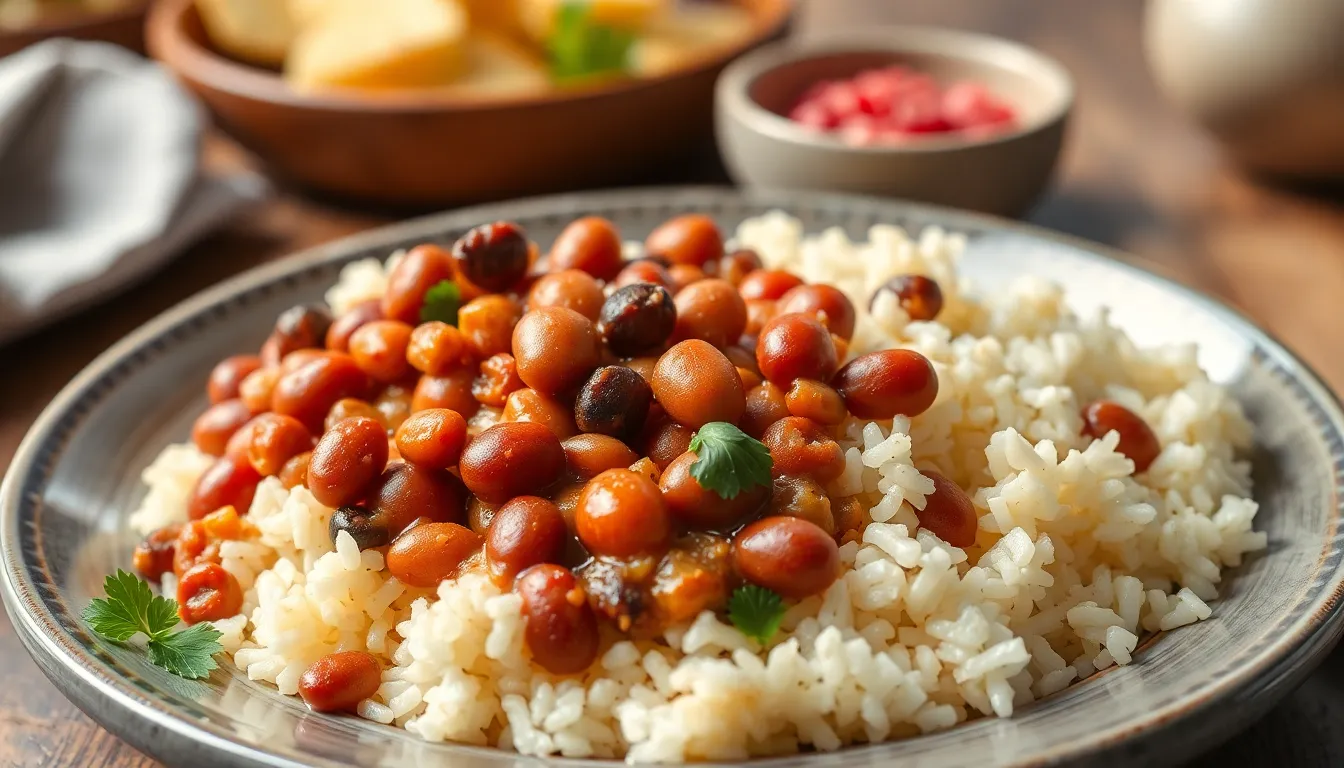
Once the beans are fully cooked and seasoned, and the rice is fluffy, combine them in a large pot. Stir gently to avoid breaking the beans. Allow the mixture to simmer together for about 5–10 minutes, letting the flavors meld. This step enhances the overall taste and creates a cohesive dish.
C. Serving Suggestions
Serve your classic bean and rice dish warm, garnished with:
- Fresh cilantro or parsley
- A squeeze of lime for brightness
- Chopped tomatoes or avocado for added texture
Pair with a side of crusty bread or a fresh salad for a complete meal!
V. Variations on a Classic Dish
A. Regional Variations (Cuban, Mexican, Indian)
This classic dish has many regional variations that showcase local ingredients and culinary traditions:
- Cuban: Cuban black beans and rice, often served with fried plantains and a drizzle of olive oil.
- Mexican: Add spices like chili powder and top with cheese, sour cream, or guacamole for a hearty meal.
- Indian: Combine with spices like turmeric and garam masala, and serve with naan or roti for a flavorful twist.
In conclusion, a classic bean and rice dish not only nourishes the body but also brings communities together through its rich history and cultural significance. Whether you stick to the traditional recipe or experiment with regional variations, this dish is sure to be a hit at your dining table. Happy cooking!