Crafting the Perfect American Chili: A Step-by-Step Guide to Spice and Flavor
Chili is more than just a dish; it’s a testament to the rich culinary landscape of America, steeped in history and flavor. This hearty, robust meal has evolved through the years, making it a beloved staple in homes across the nation. Whether enjoyed on a chilly evening or served at a summer cookout, chili warms the heart and delights the palate. In this guide, we’ll explore the essentials, techniques, and creative twists that can help you craft the perfect bowl of chili, ensuring every spoonful is a flavorful adventure.
Introduction: The Comfort of Chili
Chili’s origins can be traced back to the 19th century in the American Southwest, where it began as a simple stew made with meat, spices, and peppers. Over the years, it has transformed into countless variations, each reflecting regional tastes and available ingredients. The magic of chili lies in its spices and flavors, which can be crafted to suit individual preferences. In this article, we’ll cover everything from selecting the perfect ingredients to innovative cooking techniques, ensuring that you can create a chili that is uniquely yours.
Section 1: The Chili Essentials – Ingredients That Make a Difference
1.1 The Base: Choosing Your Meat
The choice of meat can significantly impact the flavor and texture of your chili. While traditional options include:
- Beef: A classic choice, particularly ground beef or chuck.
- Pork: Adds a slightly sweeter flavor, with options like ground pork or pork shoulder.
- Turkey: A leaner alternative that still packs a punch in flavor.
If you prefer a vegetarian or vegan option, consider:
- Jackfruit: A fantastic meat substitute with a texture that mimics pulled pork.
- Lentils: A protein-rich choice that absorbs flavors beautifully.
- Black beans: Full of protein and fiber, they add a hearty texture.
When selecting meat, look for quality cuts that are fresh and preferably grass-fed or free-range, as these tend to offer better flavor profiles.
1.2 Beans or No Beans? The Great Debate
Ah, the age-old debate: should chili contain beans? Purists might argue that true chili does not include beans, while others embrace them for their texture and heartiness. Here’s a quick overview:
- Kidney Beans: Classic choice for chili, offering a firm texture and protein boost.
- Black Beans: Rich in flavor, they add depth and a beautiful color contrast.
- Pinto Beans: Traditional in Southwestern cuisine, they’re creamy and rich.
For the best flavor, add beans towards the end of cooking to maintain their texture while imparting the deliciousness of the chili.
1.3 The Spice Spectrum: Building Your Flavor Profile
Spices are what elevate chili from good to unforgettable. Here are essential and optional spices to consider:
- Essential Spices:
- Cumin: Adds warmth and earthiness.
- Chili Powder: The heart of chili, it brings a balance of heat and depth.
- Paprika: Offers a subtle sweetness and smoky flavor.
- Optional Spices for Added Depth:
- Cayenne: For those who dare to bring the heat.
- Oregano: Adds a herbal note that complements the spices.
- Cinnamon: A surprising addition that enhances sweetness and warmth.
| Spice | Flavor Profile | Heat Level (1-10) |
|---|---|---|
| Chili Powder | Earthy, slightly sweet | 3 |
| Cumin | Warm, nutty | 2 |
| Paprika | Sweet, smoky | 1 |
| Cayenne | Hot and pungent | 7 |
| Oregano | Herbal, slightly bitter | 2 |
| Cinnamon | Sweet, warm | 1 |
Section 2: The Art of Cooking Chili – Techniques That Matter
2.1 Searing for Flavor: The Maillard Effect
The Maillard effect is a culinary phenomenon that occurs when proteins in meat react with sugars during cooking, resulting in a deep, rich flavor. Here’s how to achieve that in your chili:
- Start with a hot, dry pan.
- Add a small amount of oil to prevent sticking.
- Place your meat in the pan without overcrowding it; this allows for proper searing.
- Let it cook undisturbed for a few minutes to form a crust before flipping.
- Once seared on all sides, remove it from the pan and set aside.
By taking the time to sear your meat, you’ll enhance the overall taste of your chili.
2.2 Layering Flavors: The Importance of Timing
To create a complex flavor profile, consider when to add your spices and ingredients:
- Start by sautéing onions and garlic first, allowing them to soften and release their flavors.
- Add your seared meat back into the pot along with spices early on to infuse the flavors.
- Introduce fresh herbs or delicate ingredients later in the cooking process to preserve their flavors.
For a thicker consistency, allow your chili to simmer uncovered, stirring occasionally, to let excess liquid evaporate.
2.3 The Secret of Slow Cooking: Patience Pays Off
Slow cooking offers a unique advantage for developing flavors. Here’s why you might choose this method:
- Enhanced Flavor: The longer cooking time allows spices and herbs to meld seamlessly with the meat and beans.
- Tender Meat: Cooking low and slow breaks down tough cuts, resulting in a melt-in-your-mouth texture.
For stovetop cooking, plan for at least 1.5 to 2 hours, while a slow cooker might require 6 to 8 hours on low heat.
Section 3: Personalizing Your Chili – Creative Twists and Variations
3.1 Regional Influences: From Texas to Cincinnati
Chili is a dish that varies dramatically from region to region. Here’s a snapshot:
- Texas Chili: Often features beef and no beans, with a strong emphasis on spices and chilies.
- Cincinnati Chili: A unique blend that incorporates chocolate and is often served over spaghetti.
- White Chili: A lighter alternative that uses chicken and white beans, often flavored with green chilies.
Explore local ingredients to bring a regional touch to your chili. For instance, add green chilies for a Southwestern flair or use local sausage for a personalized twist.
3.2 Gourmet Additions: Elevating Your Chili Game
Don’t shy away from elevating your chili with gourmet toppings and unique ingredients:
- Toppings: Consider shredded cheese, fresh avocado, sour cream, or crispy bacon to enhance the texture.
- Unique Additions: Try adding a square of dark chocolate for richness, a splash of beer for depth, or smoked meats for an extra layer of flavor.
3.3 Making It Your Own: Customization Tips
Chili is a blank canvas for flavor experimentation. Here are some tips to help you customize your dish:
- Adjust the heat levels by varying the amount of cayenne or using different types of chilies.
- Change the thickness by playing with the amount of liquid or using a cornstarch slurry to thicken.
- Don’t be afraid to try unconventional ingredients like sweet potatoes or squash for added nutrition and flavor.
Section 4: Serving and Pairing Chili – It’s All About the Experience
4.1 The Perfect Bowl: Presentation Matters
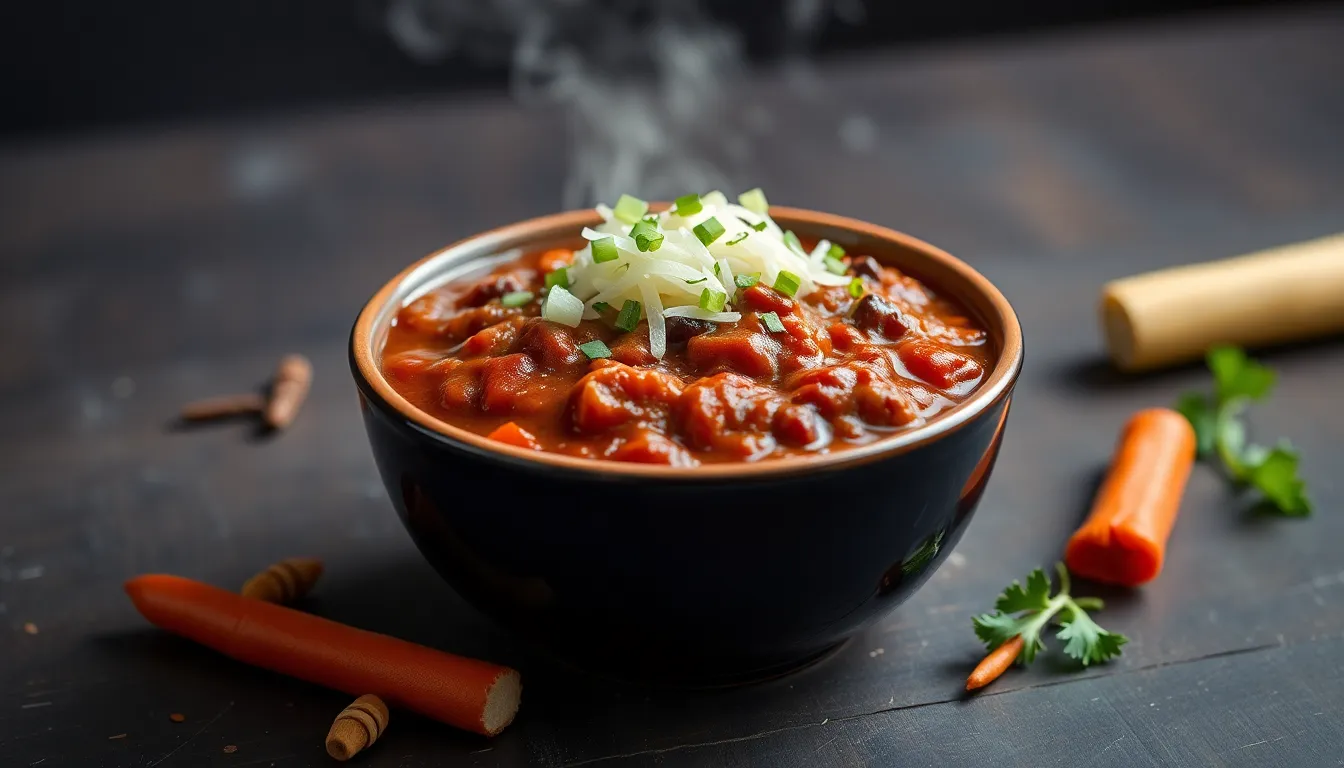
While the taste is paramount, presentation can enhance the dining experience. Consider serving your chili in rustic bowls or bread bowls for a cozy touch. Add a dollop of sour cream and sprinkle with fresh herbs for visual appeal.
4.2 Side Dishes That Complement
Pair your chili with sides that enhance its flavor profile:
- Cornbread: A sweet, crumbly bread that balances the heat of the chili.
- Rice: A neutral base that absorbs the flavors of the chili.
- Salad: A fresh, crisp salad can provide a refreshing contrast to the richness of the chili.
4.3 Beverage Pairing: Find Your Flavor Match
Choosing the right beverage can elevate your chili experience:
- Beer: A hoppy IPA or a rich stout can complement the flavors beautifully.
- Wine: A bold red wine like Zinfandel pairs well with the hearty flavors of chili.
- Non-Alcoholic Options: Consider a refreshing iced tea or a homemade lemonade for a bright contrast.
Conclusion: Your Chili Awaits!
Crafting the perfect chili is an art that combines quality ingredients, thoughtful preparation, and personal touches. With the knowledge gained from this guide, you’re equipped to create a bowl of chili that reflects your taste and style. So gather your spices, fire up the stove, and embark on a culinary adventure that will warm your heart and delight your friends and family.