Mastering the Perfect Bowl of Ramen: Tips from Top Japanese Chefs
Ramen is more than just a dish; it’s a culinary emblem of Japan, a bowl of warmth, comfort, and a rich tapestry of flavors that unite to create something magical. It has evolved through the ages, becoming a beloved staple that transcends geographical borders and cultural barriers. In this post, we will dive deep into the art of ramen-making, uncovering insights and techniques from top Japanese chefs to help you replicate the perfect bowl at home.
Introduction: A Love Letter to Ramen
Originating from China, ramen has been a part of Japanese cuisine since the late 19th century. As it grew in popularity, the dish underwent a transformation, absorbing elements from local culinary practices. Each region in Japan boasts its own variations, from the milky Tonkotsu of Fukuoka to the soy-based Shoyu of Tokyo, showcasing the versatility and intricate craftsmanship involved in ramen preparation. This article aims to share the secrets and tips from seasoned chefs to help you master an authentic bowl of ramen at home.
Section 1: The Foundation of Ramen – Broth Basics
Subheading 1.1: The Heart and Soul – Types of Broth
The broth is the essence of ramen, providing the foundational flavor that defines this beloved dish. Let’s explore the four primary types of ramen broth:
- Shoyu: Soy sauce-based, typically brown in color with a savory flavor.
- Miso: Rich and nutty, made with fermented soybeans, perfect for adding depth.
- Tonkotsu: Creamy and rich, made by simmering pork bones for hours, creating a luscious texture.
- Shio: Light and refreshing, seasoned primarily with sea salt, often the starting point for many ramen enthusiasts.
Subheading 1.2: Crafting the Perfect Broth – Tips from the Masters
Creating a broth that rivals those found in top ramen shops takes skill, patience, and the right ingredients. Here are some expert tips:
- Quality ingredients: Start with high-quality bones, meat, and aromatics. The better the ingredients, the better the broth.
- Simmering techniques: Use a large pot and keep the broth at a gentle simmer to extract maximum flavor without clouding the liquid.
- Time is key: Good broth takes time! Allow at least 4 hours for lighter broths and up to 18 hours for a rich Tonkotsu broth.
- Skim regularly: To keep your broth clear, regularly skim off any impurities that rise to the surface.
Essential Broth Ingredients
| Broth Type | Key Ingredients | Cooking Time | Flavor Profile |
|---|---|---|---|
| Shoyu | Soy sauce, Chicken, Niboshi | 4-6 hours | Savory, Umami |
| Miso | Miso paste, Pork, Vegetables | 3-5 hours | Rich, Nutty |
| Tonkotsu | Pork bones, Garlic, Ginger | 12-18 hours | Creamy, Rich |
| Shio | Sea salt, Chicken, Seafood | 4-6 hours | Light, Refreshing |
Section 2: Noodles: The Unsung Heroes
Subheading 2.1: Choosing the Right Noodles for Your Ramen
The noodles are the backbone of any ramen dish, complementing the broth and toppings harmoniously. Here’s a quick guide to the different types:
- Wavy Noodles: Often used in Tonkotsu ramen; they hold onto the rich broth well.
- Straight Noodles: Common in Shoyu ramen, these noodles provide a nice contrast to the savory broth.
- Thick Noodles: Ideal for Miso ramen, these hearty noodles stand up to rich flavors.
- Thin Noodles: Light and delicate, perfect for Shio ramen for a more refreshing experience.
Subheading 2.2: Cooking Noodles to Perfection – Tips from Experts
Getting the noodles right is crucial; here’s how the pros do it:
- Boiling: Use plenty of water to prevent the noodles from sticking together. A rolling boil is essential.
- Rinsing: After boiling, rinse them briefly under cold water to stop the cooking process and remove excess starch.
- Serving: Toss the cooked noodles in a little oil before serving to prevent clumping.
Section 3: Toppings That Make a Difference
Subheading 3.1: The Art of Ramen Toppings
The toppings are what elevates a good bowl of ramen to greatness. Here’s a rundown of traditional toppings:
- Chashu: Tender, braised pork belly that melts in your mouth.
- Menma: Fermented bamboo shoots that add texture and flavor.
- Nori: Dried seaweed that provides a slight crunch and umami.
- Scallions: Fresh green onions that bring brightness and a pop of color.
- Soft-boiled Eggs: Creamy, marinated yolks that add a luscious richness.
Subheading 3.2: Creative Twists on Classic Toppings
For those looking to experiment, consider these modern topping ideas:
- Sriracha or Spicy Oil: For a kick of heat.
- Pickled Vegetables: Adding a tangy crunch can refresh the palate.
- Grilled Corn: Sweet and juicy, a delightful addition to any bowl.
- Truffle Oil: A luxurious touch that elevates flavors.
- Fried Garlic Chips: For a crunchy, fragrant boost.
Ramen Topping Guide
| Topping | Description | Preparation Method |
|---|---|---|
| Chashu | Braised pork belly | Slow-cooked |
| Menma | Fermented bamboo shoots | Ready-to-use |
| Nori | Dried seaweed | Toasted |
| Scallions | Fresh green onions | Chopped |
| Soft-boiled Egg | Creamy yolk, marinated | Boiled, marinated |
Section 4: The Art of Assembly – Putting It All Together
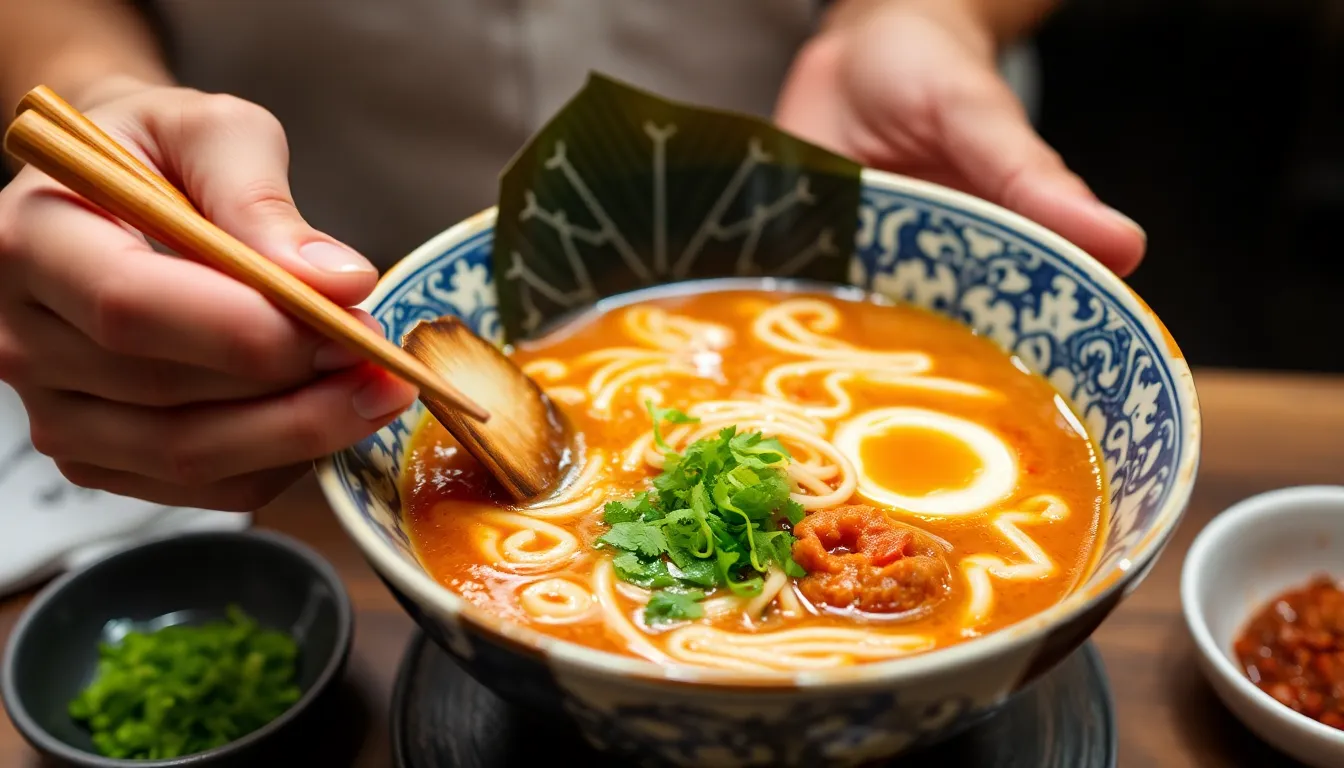
Now that we have our broth, noodles, and toppings ready, it’s time to assemble the perfect bowl of ramen:
- Start with the broth: Ladle the hot broth into your bowl first to ensure it’s steaming.
- Add the noodles: Gently place the cooked noodles into the broth.
- Layer on the toppings: Arrange your toppings artistically on top of the noodles. This is where your creativity shines!
- Finish with garnishes: A sprinkle of sesame seeds, a dash of shichimi togarashi, or a drizzle of aromatic oil can elevate the dish.
Lastly, serve your ramen piping hot with chopsticks and a spoon, and enjoy every slurp of this homemade masterpiece. With practice and a little bit of love, you’ll find yourself crafting bowls that can stand shoulder to shoulder with your favorite ramen shop.
Embrace the journey of ramen-making, and remember, each bowl tells a story. From the simmering broth to the perfectly cooked noodles and the delightful toppings, you are not just cooking—you are creating an experience that warms the soul and tantalizes the taste buds.
Happy cooking!